Built end to end · Mobile App
Social commerce for sellers who sell by DM, and for the buyers who have to trust them.

Being prepared
Arriving today, by 6 PM
- Paid
- Preparing
- Out for delivery
- Delivered
Role
Team
Year
Scope
Foundation
Selling on Instagram already works until money is involved. The price lives in a DM, payment goes to a personal account, and after that nobody can see the order.
- 01Sees a post·
- 02“How much?”Prices hidden in DMs
- 03Haggles on WhatsApp·
- 04Voice notes for trust·
- 05Pays by bank transferBuyers vanish at “send account details”
- 06Hopes it arrivesNobody can see the order
The numbers
83%
of Nigerian consumers have bought through social media
Visa, 2026
51%
were scammed in the past year; 57% of those on social
Visa, 2026
~2×
the rate websites close sales at, compared with DMs
Bumpa, 2025
Vibaar launches in Nigeria, so I designed for mid-range phones and patchy data.
Who it's for
Sellers
Run their business from Instagram, TikTok or WhatsApp.
Buyers
Pay someone they've never met.
Creators
Their taste moves what others buy.
The promise
A clear price, a real checkout, and an order you can follow to the door.
Why and how
Why
Anyone can turn social attention into income.
How
One link to a real store, Paystack checkout, tracked orders, and earnings that unlock after delivery.
What I did
- Product direction
- Interaction design
- Interface
- Design system
- Brand
- Front-end
Product
I designed both sides as one loop, in the order it happens. The test for every flow: does it remove a message someone would otherwise have to send?
Flow 01 · Sellers
Setting up
Sellers decide whether this is worth it before they've listed anything, so setup asks only what a store needs. The first product is part of setup, and publishing it opens the store.
Flow 02 · Sellers
Listing with AI
AI drafts the title, description and category from the photos. The seller types the price first and approves the draft, because price is her decision and the thing buyers hold her to.
Flow 03 · Sellers
Sharing
A new store's first buyers already follow the seller. So sharing comes right after the first product: a link that previews well in WhatsApp, and a card sized for Status.
Flow 04 · Buyers
Finding things
For buyers who don't follow anyone yet, Trending is ranked by real orders in their city, and Spotlights are sellers' own videos. Nothing here is designed to rush anyone.
Flow 05 · Buyers
Checkout
A DM sale asks for two leaps of faith: asking the price, then paying a personal account. Here the full cost is on the page, and payment goes through Paystack.
Flow 06 · Both sides
Following the order
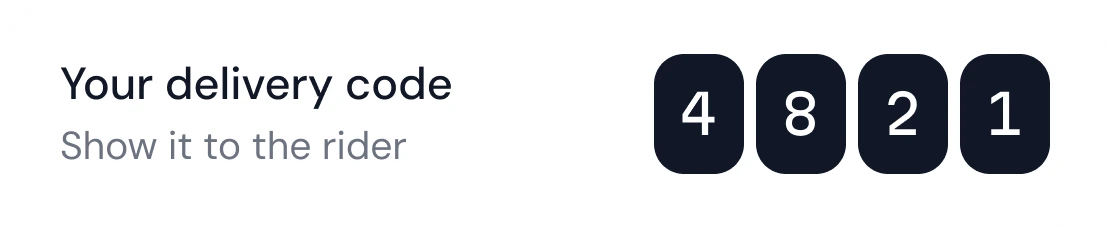
This is where trust is won. Both sides see one order that moves with the parcel. A four-digit code at the door confirms delivery and starts the seller's payout, so both people want it used.
Flow 07 · Sellers
Getting paid
The seller's real question is whether the money is coming. Every naira sits in one state, in progress, clearing or available, and only available money can be withdrawn.
Flow 08 · Sellers
Running the store
Out-of-stock products stay up, marked Sold out, so buyers can still save them. Restocking shows how many people are waiting.
Flow 09 · Buyers
After the sale
Every order lives in one tab with its next step. Only buyers can review, and each review shows the size they bought, so the next buyer can trust it.
Interface
Buyers paying a stranger are already on guard, and urgency reads as a scam. So the screens stay calm: one yellow action per screen, real stock, no countdowns.
States
When something goes wrong, the screen says what happened to the money and what happens next.
System
Order, money and delivery states repeat across hundreds of screens, and buyers notice when they disagree. Tokens and roles came first, then components with every state, and the screens are built from those.
Yellow
Action
Ultra
Link, selection
Pink
Love
Go
Money in
Gray
Text and surfaces
- surface / brandyellow.300
- surface / defaultwhite
- surface / canvasgray.50
- surface / inversegray.900
- text / primarygray.900
- text / mutedgray.500
- text / linkultra.700
- border / defaultgray.200
Brand
Problem
Personality without appeal.
Decision
Take things away.
Quiet in the product, loud at a seller's first sale.



Built in code
I built V1 in Next.js and Go. The code uses the same token values as the design, so what ships matches the file.
Softlyf · Lekki, Lagos · 10:41
Your first
sale.
₦18,500
Linen bedding set, sand. Your earnings unlock after delivery.

Outcome
01
Nine flows, hundreds of screens
Designed end to end, for sellers and buyers.
02
One system, design to code
The same tokens and components in Figma and in the Next.js build.
03
V1 built and audited
Next.js, TypeScript and a Go API, independently audited, fixed over four rounds, with Playwright tests.
Next Work
Designs checkout, billing and subscriptions for a US creator SaaS, and ships its frontend.
Confidential · Web App · Since 2021
LaunchPass